Rooms 1-2
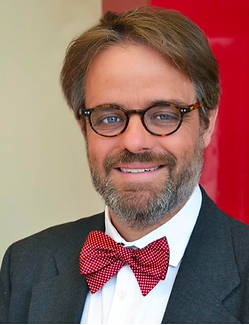
John T. Meyer | Founder, Leadmore
Dan Klosterman | Founder, Staticflow
Topic: A Fireside Chat on NFTs: The Hype, The Technology, and The Future
For a 12 month window in 2021 to 2022 NFTs were the rage. Local entrepreneurs, John T. Meyer and Dan Klosterman, each had their own wins, losses, and incredible stories from their time working in the NFT space. But now what? Are NFTs dead? What happens next? John and Dan will sit down to answer these questions along with questions from the crowd about where we go forward from here in regards to NFTs.
Rooms 6-7
Joe Santos, Ph.D. | Director and Professor of Economics in the Ness School of Management and Economics at South Dakota State University
Brittany Kjerstad McKnight, J.D. | Assistant Professor of Business Law with the Ness School of Management and Economics at South Dakota State University
Topic: Digital Social Contracts: Outside Money, Smart Contracts, and the Role of the Sovereign
In this session, Ness School professors Brittany Kjerstad McKnight and Joe Santos probe the practical viability of central bank digital currency—a conceptual form of money—and smart contracts—agreements on digital applications that append blockchains. Brittany and Joe argue central bank digital currency and smart contracts are types of digital social contracts to which the state—the sovereign—is either an explicit or implicit party. Moreover, they argue these social contracts are, either in principle or in practice, incompatible with a crypto-asset financial system, which operates by design outside the purview of the state.
Money is a social contract, a means of payment we generally accept in exchange for goods, services, and debts. Empirically speaking, to its holder money is a fiat asset that typically takes the form of currency issued by the sovereign—think, U.S. Treasury coins and U.S. Federal Reserve notes—or credit balances issued by private intermediaries—think, checking- and savings-account balances. Currency issued by the sovereign is an example of outside money, a liability of the sovereign that maintains a positive net asset value inside the economy. Central bank digital currency is digitized sovereign-issued outside money. As such, central bank digital currency necessarily operates within the purview of the state.
Like money, a smart contract is a social contract, a self-executing and immutable digitized, decentralized agreement built on a permissionless, distributed-ledger technology—think, a blockchain. Empirically speaking, to its holder a smart contract is an agreement that typically includes a conditional promise to transfer distributed-ledger balances—think, crypto assets, an outside, quasi-fiat money. To its proponents, a smart contract, like the blockchain, exists outside the purview of a sovereign as the essential agent of contract enforcement, a proposition Brittany and Joe reason is practically untenable. Rather, the sovereign is an implicit party to a smart contract and, thus, the transfer of crypto assets the contract specifies.
In summary, in practice central bank digital currency and smart contracts are social contracts that are legally incompatible with what proponents of decentralized, permissionless, distributed-ledger technologies intend: namely, a peer-to-peer accounting technology absent third-party clearing intermediaries and the legal framework within which they operate.
Room 8
Rafael Mojdan | Director, Minnesota Blockchain Initiative
Bailey Belisario | Research Engineer, Dakota State University
Danny McCabe | Co-Founder & CEO, Flexa
Topic: Revolutionizing the World: The Global Impact of Blockchain Technology and its Applications
This presentation provides a forward-looking exploration of blockchain technology and its potential global impact. We delve into the advantages and disadvantages, showcasing the possibilities for innovation and collaboration across different sectors. By discussing challenges and limitations, we aim to offer a comprehensive perspective on how blockchain, including examples such as Bitcoin, could reshape our world.